Should Your Business Bring Product Photography In-House?
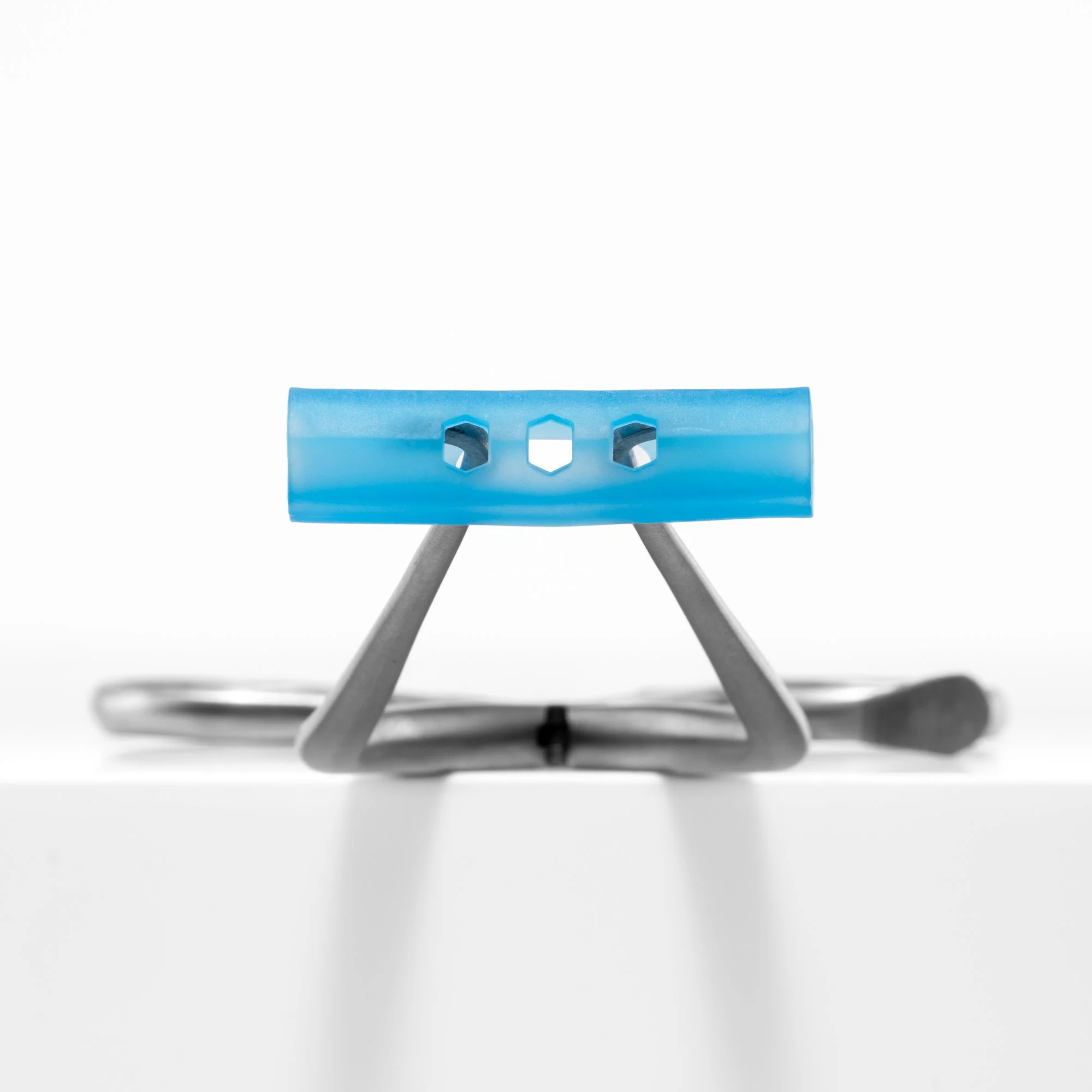
© Ryan Velting. All rights reserved.
At some point, a business with ongoing product photography needs may start asking a reasonable question:
Should we just build our own photo setup?
It is not a bad question. In some cases, it may even be the right one.
I have helped businesses build in-house photography systems. I am actually in the process of doing exactly that right now with a long-term client, helping design the system, define the scope, and make sure what they build is actually set up to succeed.
So this is not an argument against the idea. It is an honest look at what the decision actually involves, because the gap between what most companies expect going in and what the reality turns out to be is where things tend to go sideways.
In a previous article, Not Every Product Photo Needs the Same System, the point was made that different images have different jobs. Some need to be polished, brand-ready, and built to represent the company publicly. Others need to be clear, quick, and practical. That framework applies directly here, because the images you are trying to produce should drive the decision about how you produce them.
If your internal image needs are genuinely modest — reference shots for a sales team, quick documentation for a dealer network, internal product records that never appear on a public-facing page — a thoughtfully built in-house setup can serve that purpose well. It can reduce scheduling delays, give your team more control, and make smaller photo needs easier to handle as they come up.
But bringing product photography in-house is not just a gear decision. It is an operational decision. And that is where the conversation usually gets more complicated.
Buying the Gear Is Only the Beginning
The first assumption is usually simple: buy a camera, buy some lights, set up a table, and start shooting.
A working product photography setup requires considerably more than that.
Depending on the products being photographed, a business may need a camera body, lenses, a tripod or camera stand, strobes or continuous lighting, modifiers, diffusion, backgrounds, product tables, clamps, arms, flags, tape, cables, tethering hardware, tethering software, editing software, storage, backup systems, color management tools, and a clear export workflow.
And that is before anyone has produced one usable image.
The gear is not the system. It is one part of it. The real question is whether the business has a repeatable process for using that equipment consistently over time, and the honest answer on day one is almost always no. That process has to be built, tested, and refined. It takes time that does not appear in any initial budget.
Gear Has a Lifecycle
One of the less visible realities of building an in-house studio is that nothing stays new forever.
Strobes have a finite number of pops before output begins to drift and eventually fail. Cameras need service. Stands get loose. Backgrounds get scratched, scuffed, or damaged. Cables wear out. Computers slow down. Hard drives fill up. Software updates, including the Adobe Creative Cloud updates most in-house teams will be working inside, can quietly disrupt a workflow that was running cleanly the week before.
A studio is not something you purchase once and maintain on goodwill. It has to be cleaned, organized, updated, and eventually repaired or replaced in pieces.
The person building the budget in December is rarely accounting for the strobe head that needs replacing in year two, or the tethering plugin that breaks after an operating system update, or the color profiles that need to be rebuilt when the editing software changes. These are not edge cases. They are the normal operating reality of a working photo studio.
The Human Cost Is Where the Math Really Changes
Gear is visible. The human cost is where companies often underestimate the most.
Someone has to run this. That means hiring, and hiring means the number on the offer letter is not the number the company actually pays.
Employer-side payroll taxes. Health insurance contributions. Retirement plan matching. Workers' compensation. Paid time off, sick days, and holidays, during which no images are being produced. Onboarding time. Training investment. The true loaded cost of an employee typically runs between 1.25 and 1.4 times their base salary before anything else is factored in. A role budgeted at $50,000 in salary is closer to $65,000 to $70,000 in real annual cost. And unlike a professional photography engagement, that cost runs 52 weeks a year whether there is product to shoot or not.
There is another version of this conversation that comes up from time to time: why not just hire the professional photographer full time?
I have had that conversation more than once over the years, and the answer is always more complicated than it first appears. Hiring an experienced independent photographer full time is not simply the annualized version of a project fee. The company would also have to account for the client work that photographer would no longer be able to take, the business growth they would be stepping away from, and the flexibility they would lose by tying their work to one company's internal needs.
In other words, hiring a true professional full time is not automatically the cheaper version of hiring them for the right project.
The alternative, adding photography to an existing employee's responsibilities, carries its own cost. A graphic designer or marketing coordinator asked to also manage product photography is not a photographer. They are a professional with a full workload and an additional task. The accountability for image quality as a primary output simply is not there, and the images will reflect that over time.
What Does Not Show Up on Any Gear List
This is the cost that never appears in any in-house business case, and it may be the most consequential one.
A working professional photographer is not just someone who owns the equipment and knows how to use it today. They are someone who has spent years, and continues to spend significant time every week, staying current on technique, technology, trends, and craft. Podcasts. YouTube channels. Professional associations and memberships. Industry publications. Workshops. Peer communities. Watching where the work is going and continuously refining the ability to do it better.
That investment compounds over a career and shows up directly in the work. It is not something that gets purchased with the gear or transferred during onboarding. It is the result of photography being not just a job but the thing a professional has built their entire working life around.
The person hired to fill a combined role, graphic designer and photographer, or marketing coordinator who also handles product images, is not doing that. They are doing their job, and photography is one component of it. The gap between someone for whom photography is everything and someone for whom it is a task starts narrow. It widens every year. And it eventually shows up in the catalog.
What Happens When Something Goes Wrong
A professional does not just know how to use the equipment. They know what to do when it stops working the way it should. That knowledge does not come with the gear purchase.
The troubleshooting that happens in a working production environment is constant and varied. Something in the tethering chain breaks and images stop transferring. Color starts drifting between sessions and no one can identify why. A software update quietly disrupts a workflow that was running cleanly. A strobe begins to fail gradually, not all at once, but slowly enough that the inconsistency accumulates across dozens of images before anyone notices. Export settings produce files that look correct on screen but shift when they hit a website, a retailer portal, or a print vendor.
Each of these is a solvable problem for someone who has encountered it before. For someone who has not, each one is a potential half-day interruption.
Most companies building in-house will be working inside the Adobe ecosystem and will default to Lightroom as the editing and file management solution. That is a reasonable starting point. It is familiar, it integrates with tools the team already uses, and it feels like a natural extension of an existing workflow.
But using Lightroom for a high-volume product catalog is a different skill set than general Adobe familiarity. Building consistent develop presets, managing color profiles, maintaining a calibrated export workflow, keeping a library of several hundred SKUs correctly named and organized — these are not settings that configure themselves. Color management alone, from camera profile through export settings for web versus print versus e-commerce platforms, is an area where things go quietly wrong in ways that are not always visible on screen until the files are already in the wrong hands.
A professional working at this level every day knows the diagnostic sequence cold. An hourly employee navigating the same problem while managing other responsibilities is opening a browser and searching for an answer, and may not know how to frame the question correctly because they do not fully understand what they are looking at.
Someone Has to Own the Standard
This may be the most important part of any in-house product photography setup, and the part most businesses underestimate until they are deep enough into it to feel the problem.
It is not enough to get a few good images at the start. The real value of an in-house system comes from producing consistent images over and over again across an entire catalog. That means:
Consistent lighting
Consistent angles
Consistent crop
Consistent color
Consistent file naming
Consistent editing
Consistent export settings
Consistent organization
Without a clear standard and someone responsible for protecting it, small changes accumulate quietly. One person moves a light slightly. Another adjusts the crop. A background gets replaced with a slightly different material. The white balance drifts. The shadows shift. The product line starts to feel uneven, not because anyone did a bad job, but because no one was accountable for keeping the system intact.
Ramp-up time makes this harder than it looks. By the time a team realizes the early images are not quite right, there is already a body of work that does not meet the standard the newer images are starting to approach. Now there is a consistency problem baked into the catalog. Those images either get used anyway, quietly undermining the brand impression, or they get reshot. Which means spending time and money producing work that should have been right the first time.
That cost never shows up in the original business case. It should.
The Best In-House Studios Are Built Like Systems
The most successful in-house photo setups are not built around gear. They are built around systems.
They have a clear purpose. Defined standards. Repeatable lighting. A documented workflow. Naming conventions, folder structures, export settings, and a plan for how the images will actually be used and where they need to go.
The goal is not just to take a picture. The goal is to produce usable image assets that support the business consistently over time. That is a very different thing.
Before building anything, a business should be able to answer questions like:
What types of products will be photographed, and how many per year?
Where will the images be used — website, catalog, retailer listings, internal materials?
What angles, backgrounds, and file formats are required?
Who is responsible for editing, quality review, and final delivery?
What happens when the person who runs the system is unavailable?
What does the standard look like, and who owns it?
Those questions may not sound exciting. But they are the difference between a pile of equipment and a working production system.
Sometimes the Right Answer Is Both
For many businesses, the most practical approach is not fully in-house or fully outsourced. It is a combination of both.
An internal team can handle simple updates, quick reference images, basic product shots, or recurring needs that follow a strict template. A professional photographer handles the work that carries more weight — product launches, brand-defining catalog images, difficult materials, advanced retouching, 360° spin photography, or building the original system so the internal team has something solid to work from.
That hybrid approach can be very effective. It gives the business more control over everyday needs while protecting quality when the stakes are higher.
That is what a realistic version of this looks like in practice. The in-house capability serves a specific, well-defined category of need. It does not replace the work that has to represent the brand at its best. That line gets established clearly before anything is purchased, and that clarity is exactly what makes the investment viable rather than a slow drain on time and resources.
The Real Question
The question is never whether an in-house setup can produce images. It can. The real question is whether those images can carry the weight you are asking them to carry, and whether the honest, complete cost of building and maintaining the system to produce them is actually lower than the alternative.
Most businesses find that the answer depends entirely on what they are trying to solve. For the right category of work, with the right system behind it, in-house can make sense. For work that has to represent the brand publicly and hold up across a full catalog, the math and the quality argument often point toward a more professional or hybrid approach.
If you are working through that decision and want a straight conversation from someone who has been on both sides of it, that conversation is worth having.